Grip Strength: The Longevity Marker You Can Actually Train
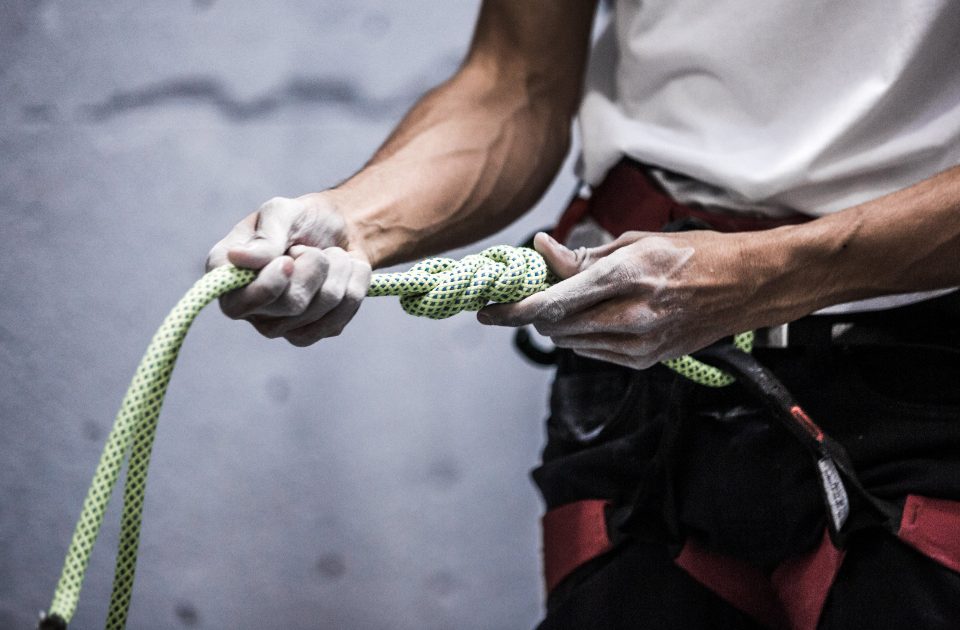
Of all the numbers a doctor could squeeze out of you in thirty seconds, one of the most predictive requires no needle, no treadmill, and no fasting: how hard you can squeeze a handle. Grip strength keeps embarrassing fancier biomarkers in longevity research, and unlike your genes or your age, it responds to training within weeks.
Jars, deadlifts, dog leashes, stuck lids, luggage, monkey bars with your kids — the tests come daily anyway. Might as well pass them for decades.
Why researchers keep measuring hands
The headline evidence comes from the PURE study, published in The Lancet — nearly 140,000 adults across 17 countries, followed for about four years. Every 5-kilogram drop in grip strength was associated with a 16 percent higher risk of death from any cause and about 17 percent higher cardiovascular mortality. Strikingly, grip predicted cardiovascular death better than systolic blood pressure did. A hand dynamometer outperforming the blood pressure cuff was not the result anyone’s money was on.
UK Biobank analyses of half a million people found the same direction: weaker grip, higher risks of heart disease, respiratory disease, and early death, even after adjusting for the usual suspects. And in aging research, grip is a core diagnostic criterion for sarcopenia — the age-related muscle loss syndrome — with common cutoffs around 27 kg for men and 16 kg for women flagging clinically low strength.
To be clear about what this means: nobody thinks forearms are magic. Grip is a proxy — a cheap, honest window into total-body muscle mass, nervous-system function, and how much physical life you’ve been living. Which leads to the obvious question researchers still debate: if you train grip directly, do you capture the longevity benefit, or just juice the test? The boring, probably-correct answer is that grip training worth doing is full-body strength training in disguise, so the distinction mostly dissolves in practice.
Where you probably stand
Population norms put healthy men in their 30s around 46–50 kg of grip force and women around 29–32 kg, with a slow decline after 40 that accelerates past 65. No dynamometer? Field tests work: a dead hang from a pull-up bar (60 seconds is solid for most adults; under 20 suggests work to do), or carrying half your body weight in dumbbells for 30 meters without setting them down. If the jar lid, the stubborn tent pole, and the firm handshake have all started negotiating with you, that’s data too.
The three grips, because they’re trained differently
- Crush — closing force, handshake force. Trained by grippers, thick handles, and simply lifting heavy things.
- Support — holding on over time. The one that fails first in real life: carrying groceries, hanging, long sets of rows. Trained by carries and hangs.
- Pinch — thumb versus fingers. Opening jars, holding plates, gripping flat objects. Trained by pinching plates and thick objects.
Support grip carries most of the everyday and longevity-relevant load, which is convenient, because it’s also the easiest to train without buying anything.
Training it: mostly a byproduct, occasionally a target
First, the free wins. If your week already includes deadlifts, rows, pull-ups, and carrying anything heavy, your grip is being trained — provided you don’t outsource it. Lifting straps have their place for max-effort back work, but strapping up for every set quietly deletes years of incidental grip work. Save the straps for the heaviest sets; let your hands do the rest.
For deliberate work, two additions cover nearly everyone:
- Farmer carries, twice a week. Grab the heaviest pair of dumbbells you can hold with proud posture and walk 20–40 meters. Rest, repeat three or four times. This trains support grip, traps, core, and gait all at once — arguably the most honest exercise in the gym.
- Dead hangs, most days. Accumulate 60–90 seconds hanging from a bar, in as many sets as needed. Shoulders get decompression and mobility work in the same purchase.
Progress by adding load or time, roughly 5–10 percent every couple of weeks. Forearms recover fast, but tendons adapt slower than muscles — the classic mistake is buying a heavy gripper, going hard for ten enthusiastic days, and earning a case of tendinitis that costs two months. Two focused sessions weekly is plenty. People with arthritis, carpal tunnel, or recent hand injuries should shape this with a physical therapist; grip work is usually good for arthritic hands at the right dose, but the right dose is the whole trick.
An eight-week starter block
Weeks 1–2: dead hangs, three sets to comfortable effort daily, plus two carry sessions at a moderate weight. Weeks 3–5: add 10–20 percent to carry weight, push hang total toward 90 seconds. Weeks 6–8: heavier carries in shorter distances, single-arm carries for core involvement, retest your dead-hang max. Most beginners add 20–30 seconds to their hang inside the block, and it shows up everywhere — last reps of pull-ups, tighter deadlifts, groceries in one trip like nature intended.
Can grip strength really tell me how long I’ll live?
It’s a statistical marker across populations, not a personal countdown clock. Weak grip flags elevated risk the way high blood pressure does — worth acting on, not worth doom-scrolling about. The response to a bad number is the same as the response to a good one: keep lifting.
Will grip training give me huge forearms?
Modest ones, eventually. Forearm size responds slowly, and grip strength outpaces it — you’ll be crushing jars long before sleeves feel tight. For visible mass, add direct wrist curls and reverse curls; for function and the health markers, the carries and hangs already have it covered.
Are those spring hand grippers worth it?
Fine as desk fidget tools with light springs for endurance, or as a dedicated hobby with serious graded grippers. The middle version — one random heavy gripper squeezed sporadically — mostly delivers sore tendons. Carries and hangs give more return for less risk.
My grip fails before my back on deadlifts. Fix?
Train the pattern: double-overhand hold your last warm-up set for 10 seconds after locking out, add carries, and chalk up. Use straps only for top sets. In six to ten weeks the gap usually closes — grip catches up quickly when it stops being babysat.
Related reading
Affiliate & medical disclosure: This review is independent and for information only, not medical advice. Some links may be affiliate links; we may earn a commission at no cost to you, which never affects our score. Consult a licensed provider before starting any product.