Musely FaceRx Review: The $36 Spot Cream and What the Catalog Really Costs
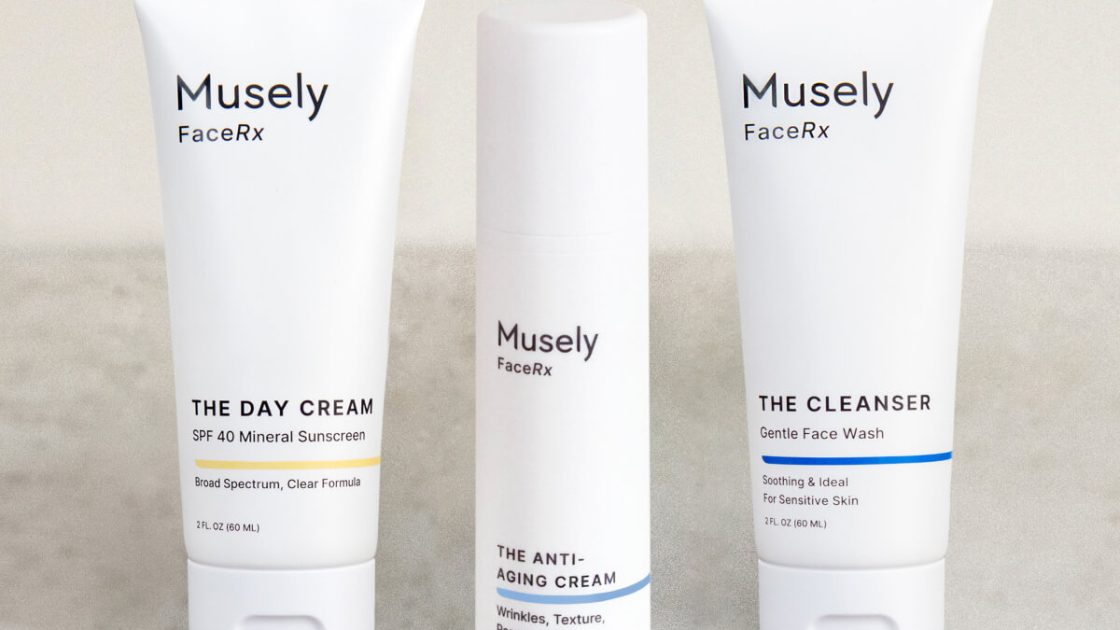
Musely’s FaceRx catalog reads like a dermatologist’s prescription pad turned into a menu: custom-compounded creams for dark spots, wrinkles, redness, under-eyes, body hair and scalp hair, each with a flat monthly price and a doctor’s review built in. The headline product — The Spot Cream — costs $36 a month. Here’s what that number actually involves, and what the rest of the catalog adds up to.
The catalog, priced out
| Treatment | Target | Price |
|---|---|---|
| The Spot Cream | Dark spots, melasma (hydroquinone up to 12% or azelaic 17%) | $36/mo (2-month supply) or $103 one-time |
| The Anti-Aging Cream | Wrinkles, texture, pores (tretinoin-based) | ~$35/mo |
| The Eye Serum | Under-eye lines and darkness (exosome) | ~$49/mo |
| The Body Cream | Dark spots below the neck | ~$30/mo |
| The Spot Pill | Oral route for stubborn pigment | ~$99 |
| Hair Topical Solutions | Thinning (women’s and men’s formulas) | ~$32–$36/mo; bundle ~$69 |
| The Facial Hair Cream | Slowing face and upper-lip hair | ~$33/mo |
| Day Cream SPF 40 / Cleanser | Non-prescription support | Varies |
Every prescription item includes the physician review in the price — the economic trick that makes $36/month beat a cash-pay dermatology visit before a cream is even compounded.
What ordering is actually like
The flow: choose a concern, complete a medical questionnaire with photos, and a board-certified doctor either prescribes, adjusts, or declines. Shipping is free, refills run on a two-month cycle, and the formula can be adjusted mid-course through the messaging channel — useful when tretinoin or hydroquinone starts strong and your skin needs the strength stepped down. Refill pricing drops the longer you stay subscribed.
The three things worth knowing before checkout
- It’s an auto-refill business. The $36/month price rides on a subscription billed per two-month supply. The one-time $103 option exists precisely for people who don’t want that — use it if you’re trialing.
- Prescription actives demand respect. High-strength hydroquinone is typically cycled with breaks, and tretinoin purges before it polishes. The prescribing doctor sets the protocol; actually read it. These are the same first-line ingredients the American Academy of Dermatology lists for melasma and photoaging — effective because they’re strong, prescription-gated because they’re strong.
- The guarantee has a clock. Musely’s 60-day “Promise” is a results guarantee with conditions, and pigment change runs on an 8–12-week timeline — so document your starting point with photos on day one, not day forty.
Where it fits — and where it doesn’t
Musely makes the most sense for concerns where prescription actives clearly outperform retail skincare: entrenched melasma, sun damage, photoaging. For mild unevenness, a drugstore azelaic acid or niacinamide routine costs a fraction and may be plenty. And for anything that looks irregular rather than cosmetic — new, changing, or asymmetric pigment — a camera-based telehealth review is not a skin-cancer screen; that still belongs to an in-person dermatologist.
Claimed scale: 1.3 million patients, per the company. The on-platform before-and-afters are curated by the brand, as they are everywhere in this category — weigh them accordingly.
Our verdict
As telehealth skincare goes, Musely pairs genuinely evidence-backed prescription ingredients with pricing that undercuts both dermatology offices and most online rivals. Treat the subscription mechanics with adult supervision, respect the actives, and it earns its spot. Trial with the one-time purchase; commit with the refill plan.
How the economics compare inside our coverage
We review a lot of telehealth: GLP-1 programs where the medication itself costs $99–$399 a month, hair-loss services in the $20–$60 range, and testing kits at $149–$299 a pop. Against that landscape, Musely’s $30–$49 price points with the physician review bundled in sit at the affordable end of prescription telehealth — the compounding-pharmacy model applied to skincare instead of weight loss. The structural caveat is identical across all of them: compounded products are prepared by state-licensed pharmacies and are not FDA-approved products, even when the individual active ingredients are the best-studied in their field.
A realistic 90-day plan
Week zero: order, take baseline photos, read the protocol the prescribing doctor sends. Weeks one to three: expect adjustment — tretinoin users often see purging, hydroquinone users mild irritation; message for a strength adjustment rather than powering through misery. Weeks four to eight: this is where visible change typically begins for pigment; keep the morning SPF 40 habit absolute. Weeks eight to twelve: evaluate against your day-zero photos, not the mirror. Then decide: continue the refill plan at the loyalty-discounted rate, step down to maintenance, or stop — you’ve gotten a full course either way, which is more than a $103 one-time purchase can say for most prescription routes.
The fine print we’d flag
Three clauses deserve a highlighter. The refill cycle bills per two-month supply, so a “monthly” price leaves your card in $72 steps — budget accordingly. The loyalty discounts that lower refill prices reset if you cancel and return, which quietly penalizes the trial-and-stop-and-restart pattern many skincare users follow. And the 60-day guarantee asks for photographic evidence and protocol adherence, which is reasonable — but it means the guarantee is claimed, not automatic. None of this is unusual for the category; all of it is worth knowing on day one rather than day sixty-one.
Is $36/month good value for prescription skincare?
Against a cash-pay derm visit plus a compounded prescription, clearly yes. Against drugstore actives for mild concerns, not necessarily — match the tool to the severity.
Can I stop after one course?
Yes — either buy once at $103, or cancel the refill plan anytime. Set a reminder before the two-month renewal if you’re undecided.
Does Musely treat men’s concerns too?
Yes — the hair-thinning topicals come in men’s formulas, and the skin treatments are unisex. The facial-hair-slowing cream targets a largely female concern.
Related reading
Affiliate & medical disclosure: This review is independent and for information only, not medical advice. Some links may be affiliate links; we may earn a commission at no cost to you, which never affects our score. Consult a licensed provider before starting any product.