Aspen Green Oil vs Gummies vs Cooling Cream: Where Each One Wins
Aspen Green solved the quality question the expensive way — USDA organic certification, physician-formulated blends, third-party testing on every batch — and then quietly left you with a harder question at checkout: the oil, the gummies, or the cooling cream? At $59.99 to $139.99 a jar or bottle, guessing wrong is not a tragedy, but it is an $80 lesson you do not need to learn.
This is a three-way format face-off, fought where these products actually differ: raw strength, control, targeting, and day-to-day livability. You will get a verdict after every round and a straight answer about which format deserves your first order — because “they’re all great” is true of this brand and useless as buying advice.
Tale of the tape
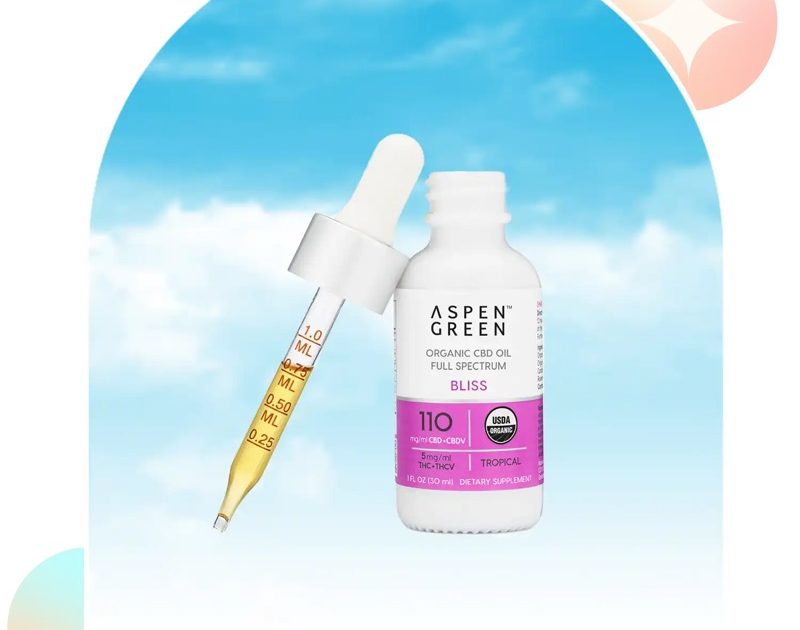
In one corner: the Bliss oil, a full-spectrum heavyweight at 110mg of cannabinoids per milliliter, $139.99. In the second: the gummy lineup — Bliss, Rest, Calm, and Relief — running $59.99 to $89.99, each pairing real CBD doses with real THC (2.5 to 5mg per serving) plus functional ingredients like ashwagandha, magnesium, and L-theanine. In the third: the Relief Cooling Cream, packing 1,000mg of CBD and 33mg of THC into a topical, $89.99. Everything is USDA Certified Organic — still a rarity in CBD — and everything stays within the 2018 Farm Bill’s 0.3% delta-9 limit.
One warning that covers the whole card: Aspen Green’s full-spectrum products contain genuine THC, and even legal amounts can show up on a drug test. If workplace screening is part of your life, that is a fact to weigh before any of the three formats, not after. And as with all CBD products, the FDA has not evaluated these for treating any condition.
Round 1: Raw strength for your money
The Bliss oil is the most concentrated thing Aspen Green sells — 110mg per milliliter puts a full month of high-dose servings in one bottle, and the per-milligram math beats the gummies comfortably at the top end. Gummies counter with honest but fixed potency: 25 to 100mg of CBD per piece depending on the blend, no measuring required, no mental arithmetic. The cream plays a different sport entirely — its 1,000mg of CBD stays in the skin and muscle where you rub it, so comparing its milligrams to an ingestible’s is apples to engine oil.
Round 1 verdict: the oil, and it is not close. If potency per dollar is your scoreboard, the $139.99 sticker is the cheapest strong CBD in the lineup.
Round 2: Control versus convenience
Strength means little if you cannot steer it. The oil’s dropper gives you quarter-milliliter precision — invaluable in your first month, when the sensible play is starting low and nudging upward every few nights. It also acts faster than anything you swallow whole, since sublingual absorption skips part of the digestive detour. The price of that control is ritual: holding an earthy-tasting oil under your tongue is nobody’s favorite sixty seconds.
Gummies flip the trade. Zero measuring, pleasant flavors, effects that arrive slowly but stay for the long haul — the profile most people want for sleep or a full stressful day. And because each blend is physician-formulated around a purpose, with the functional ingredients matched to it, choosing your gummy is really choosing your goal. The cream requires no dosing philosophy at all: apply to the complaining body part, reapply when needed.
Round 2 verdict: oil for the dialing-in phase, gummies once you know your number. Call it a draw that resolves with time.
Round 3: Whole body or one stubborn spot
Here the cooling cream stops being the odd one out and starts winning. A knee that complains on stairs, a shoulder that hates your desk setup, a back that files grievances after yard work — these are local disputes, and shipping cannabinoids through your whole bloodstream to address one joint is the indirect route. The cream’s 1,000mg of CBD and 33mg of THC work where they are applied, the cooling sensation registers in minutes, and none of it meaningfully enters circulation — which also makes it the format least likely to complicate a drug screen.
For anything systemic — sleep quality, background stress, general recovery — the ingestibles keep their crown, with the oil for adjustable whole-body support and the gummies for scheduled, repeatable routines. Media reviewers at Healthline and Forbes Health have covered Aspen Green’s lineup along exactly these lines: the formats are complements, not rivals.
Round 3 verdict: cream for anything with a location, ingestibles for everything without one.
Round 4: The cost of commitment
Trying a premium brand should not require premium conviction. This is where the gummy lineup quietly wins a round on price structure: $11.99 sample packs let you audition a blend for the cost of lunch, and the full jars top out at $89.99. The oil asks for $139.99 up front — fair per milligram, but a real commitment to a taste and ritual you have not tried yet. The cream sits at $89.99 with no sample tier, though a single application answers the “does this help my knee?” question faster than any ingestible can answer its equivalent.
Round 4 verdict: gummies take the low-risk entry crown; the oil demands — and mostly earns — the biggest leap of faith.
The scoreboard
| Round | Bliss Oil | Gummies | Cooling Cream |
|---|---|---|---|
| Strength per dollar | Win | 2nd | N/A (topical) |
| Control vs convenience | Win (control) | Win (routine) | 3rd |
| Targeting | Systemic | Systemic | Win (local) |
| Entry cost | 3rd ($139.99) | Win ($11.99 samples) | 2nd ($89.99) |
Which should you pick?
Start with the oil if you are serious about finding your precise dose, want the strongest and fastest-acting option, and do not mind the taste tax. Start with the gummies if you want a routine you will keep, a blend matched to a specific goal, and the cheapest possible first date with the brand via sample packs. Start with the cooling cream if your reason for reading this has a specific address on your body — or if drug testing makes ingestible THC a nonstarter. Budget for two formats eventually; most long-term Aspen Green customers end up pairing an ingestible baseline with the cream for flare-ups.
Frequently asked questions
Is the oil really better value than the gummies?
Per milligram of cannabinoids, yes — 110mg/mL at $139.99 outpaces the gummy jars. Per unit of convenience, the gummies win. Value depends on which currency you count.
Will the cooling cream affect a drug test?
Topicals barely reach the bloodstream, making the cream the lowest-risk format despite its 33mg of total THC. The oil and gummies, taken internally, carry genuine drug-test risk even at Farm Bill-legal levels.
Does USDA organic actually matter for a topical?
Arguably more than for ingestibles — you are leaving the product on your skin for hours. Certification also covers the hemp sourcing behind every format identically.
Can I combine formats?
Yes, and it is common — an evening ingestible plus targeted cream use different routes and do not stack in any meaningful systemic way. Start each one separately so you know what each contributes.
Final bell
Scorecard: oil takes strength and control, gummies take routine and entry price, cream owns every problem with coordinates. Aspen Green made the quality decision for you the day it earned the USDA seal; the format decision is yours, and now it should be an easy one. Pick the corner that matches your problem, start low, and let the certificates of analysis — published for every batch — do the trust work.
Related reading
Affiliate & medical disclosure: This review is independent and for information only, not medical advice. Some links may be affiliate links; we may earn a commission at no cost to you, which never affects our score. Consult a licensed provider before starting any product.