Shed vs Brand-Name GLP-1: Is the Compounded Route Worth It in 2026?
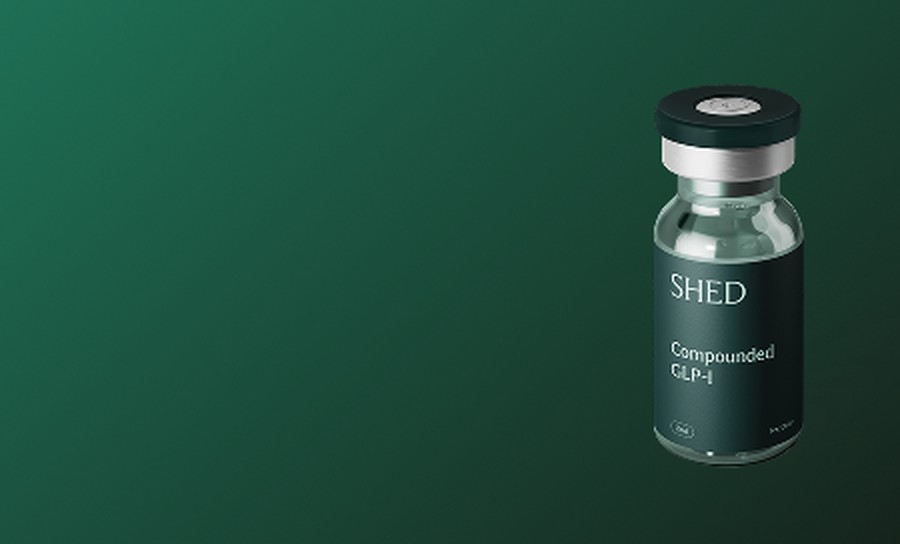
A friend texted me last month: “Wegovy is $500 a month and Shed says $159. What’s the catch?” Fair question, and it’s the one this Shed vs brand-name GLP-1 comparison is built around. The compounded route is dramatically cheaper on paper. Whether it’s actually worth it in 2026 depends on a few things the price tags don’t show.
Shed (you’ll also see it as ShedRx) is a Phoenix-based telehealth platform that’s grown past 150,000 members since 2022. Its pitch is one of the broadest medication menus in the category plus a real care team. The comparison that matters isn’t Shed against other compounders, though. It’s Shed against the FDA-approved brands people already recognize.
The price gap, laid out honestly
Shed’s compounded semaglutide starts around $159 a month. Compounded tirzepatide starts near $239. Those are entry-dose numbers, and here’s the catch worth flagging up front: as your dose steps up over the months, the price usually climbs too. Several members report semaglutide creeping from the low starting rate toward $299 at higher doses. So treat the “from $159” as a floor, not the price you’ll pay all year.
Now the brands. Cash-pay Wegovy sits around $499 a month. Zepbound vials through the manufacturer’s self-pay program run roughly $349 to $499 depending on dose. Even at Shed’s higher dose pricing, the compounded route is meaningfully cheaper. Here’s the side by side.
| Option | Type | Monthly cost | FDA-approved product? |
|---|---|---|---|
| Shed compounded semaglutide | Compounded | From $159 (rises with dose) | No |
| Shed compounded tirzepatide | Compounded | From $239 (rises with dose) | No |
| Wegovy (semaglutide) | Brand-name | ~$499 cash | Yes |
| Zepbound (tirzepatide) | Brand-name | ~$349–$499 vials | Yes |
Over a year, choosing Shed’s semaglutide over cash Wegovy could save you north of $3,000. That’s not a rounding error. It’s the reason compounded programs exploded in the first place. And Shed goes further than most on format: alongside the standard injections it offers GLP-1 liquid drops and lozenges for people who genuinely can’t stand needles, plus access to the newly approved oral pill Foundayo. That menu breadth is unusual, and for a needle-averse patient it can be the deciding factor before price even enters the conversation.
What you give up going compounded
This is the part the savings figure hides. Compounded semaglutide and tirzepatide are not FDA-approved products. The agency reviewed Wegovy and Zepbound as finished drugs for safety, effectiveness, and manufacturing consistency. It has not done that for the compounded versions, which are mixed by licensed pharmacies for individual patients. After the FDA declared the semaglutide and tirzepatide shortages resolved in 2025, the legal footing for mass compounding narrowed, so availability can shift. It’s still a prescription, and a licensed provider decides whether it’s right for you.
Translation: with the brands you’re paying a premium for a tightly regulated, consistent product. With Shed you’re trusting the compounding pharmacy’s quality and Shed’s oversight of it. For a lot of people that trade is reasonable given the price gap. For others, especially anyone with complex health conditions, the FDA-reviewed version is worth the extra money. Neither answer is wrong.
Where Shed adds value beyond the vial
If you’re going compounded anyway, Shed brings more than a mailed injection. There’s an actual care team, a named MD, an RN, a nutritionist, a health coach, and a member success manager, plus follow-up appointments, text coaching, online courses, a tracking app, and a community. And it runs a money-back guarantee: lose 5% of your body weight in 120 days or get your money back, terms applying.
Read that guarantee closely before you lean on it, because “terms applying” is doing quiet work, and performance guarantees usually require you to follow the protocol exactly. Still, most bargain compounders offer nothing like it. What we’d have liked to see is clearer, upfront dose-by-dose pricing so the eventual cost isn’t a surprise at month four. That’s my one real gripe here.
So is the compounded route worth it?
For a cash-paying adult without insurance coverage for GLP-1s, and there are a lot of them, Shed’s math is hard to argue with, especially given the care team wrapped around it. Obesity affects roughly 42% of US adults per NIH figures, and most insurance still won’t touch these drugs for weight loss, which is exactly the gap compounded programs fill.
Go brand-name if your insurance actually covers Wegovy or Zepbound, if you have a complicated medical history, or if the FDA-approved label is non-negotiable for your peace of comfort. Go compounded with Shed if you’re paying out of pocket, you want support instead of just a vial in a box, and you’ve made your peace with the not-FDA-approved tradeoff. Just budget for the higher doses, not the intro price.
Frequently asked questions
How much cheaper is Shed than Wegovy or Zepbound?
A lot. Shed’s compounded semaglutide starts around $159 a month versus roughly $499 for cash-pay Wegovy, and compounded tirzepatide starts near $239 against Zepbound’s $349 to $499. Just remember Shed’s prices rise as your dose increases, so the real yearly gap is smaller than the intro numbers suggest, but still large.
Is Shed’s compounded GLP-1 as safe as the brand-name drugs?
Shed’s compounded semaglutide and tirzepatide are not FDA-approved products, so they haven’t been reviewed the same way Wegovy and Zepbound were. They’re prepared by licensed pharmacies and require a prescription from a provider who decides they’re appropriate. The brand-name versions carry the full FDA review; the compounded ones trade that for a lower price.
What does Shed’s money-back guarantee actually cover?
Shed advertises a guarantee of losing 5% of your body weight within 120 days or your money back, with terms applying. Those terms typically require following the program as directed, so read the fine print before counting on a refund. It’s still more protection than most compounded sellers offer.
Will my Shed price stay at the advertised rate?
Probably not for the whole journey. The “from $159” and “from $239” figures are entry-dose prices, and members report costs rising as doses increase toward maintenance levels. Ask Shed for the full dose-by-dose pricing before you enroll so you can budget for month four, not just month one.
Related reading
- Direct Meds Review 2026: Straightforward, Direct-Pricing GLP-1
- HealthRX Review 2026: Transparent Pricing, Fast Approval — We Put It to the Test
- HealthRX vs the Budget GLP-1 Programs: Does Fast Approval Justify the Price?
- Wellorithm’s GLP-1 Menu Decoded: Compounded vs Brand-Name, and What the Guarantee Really Covers
Affiliate & medical disclosure: This review is independent and for information only, not medical advice. Some links may be affiliate links; we may earn a commission at no cost to you, which never affects our score. Consult a licensed provider before starting any product.