Steel-Cut vs Rolled vs Instant Oats: Does Processing Matter?
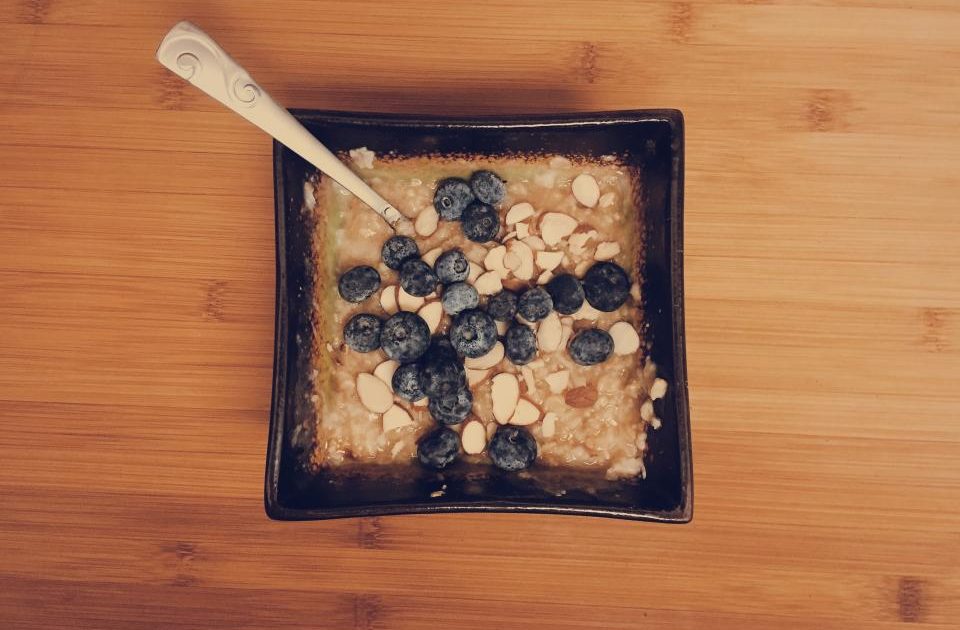
Stand in the oatmeal aisle long enough and you’ll notice the price triples as the cooking time shrinks. Steel-cut oats in the tin: cheap, 25 minutes. Rolled oats: middle ground. Instant packets: pennies per gram more, ready in 90 seconds, often pre-sweetened. Same grain, three levels of processing, and a whole lot of internet arguing about which one you’re “allowed” to eat.
The short answer: the differences are real but smaller than the arguing suggests. The long answer is more useful, so here it is.
What actually happens to the oat
Every version starts as the same oat groat — the whole kernel with the bran, germ, and endosperm intact. From there:
- Steel-cut (Irish) oats are groats chopped into two or three pieces with steel blades. Minimal processing, chewy texture, longest cook time.
- Rolled (old-fashioned) oats are groats that get steamed, then flattened between rollers. The steaming partially cooks them, which is why they’re done in five to ten minutes.
- Instant oats are rolled thinner, chopped smaller, and steamed longer. More surface area, more pre-cooking, near-zero prep.
Here’s the part that surprises people: all three are still whole grains. The bran and germ survive every step. Rolling and steaming aren’t the same as refining — nothing gets stripped away the way it does when wheat becomes white flour.
The nutrition label barely moves
Gram for gram, the three are nearly identical on paper. USDA food data puts a half-cup of dry rolled oats at roughly 150 calories, 5 grams of protein, and 4 grams of fiber — and steel-cut numbers land within rounding distance once you match the serving weight. Same beta-glucan, the soluble fiber oats are famous for. Same minerals.
That beta-glucan matters more than the format. The FDA has allowed an actual health claim on oat products since 1997: 3 grams per day of soluble fiber from oats, as part of a diet low in saturated fat, may reduce the risk of heart disease. You can hit that 3 grams with steel-cut, rolled, or plain instant. The oat doesn’t care how flat it is.
One honest caveat about the labels, though: flavored instant packets are a different product. A typical “maple & brown sugar” packet carries around 12 grams of added sugar in a serving barely over 40 grams of food. That’s not an oats problem. That’s a dessert wearing an oats costume.
Where processing does matter: blood sugar
Texture changes digestion speed. Chop and flatten a grain and your enzymes reach the starch faster, which shows up as a quicker, higher blood glucose rise. Glycemic index tables compiled by University of Sydney researchers reflect this: steel-cut and thick rolled oats generally test in the low-to-mid 50s — solidly low-GI — while instant oatmeal commonly lands in the 70s, high enough to sit near white bread territory.
Does that matter for you? Depends who you are. Research consistently shows that people with type 2 diabetes or prediabetes see flatter post-meal glucose curves with less-processed oats, and for them the steel-cut upgrade is probably worth the extra minutes. For a metabolically healthy person eating oats with protein and fruit, the practical difference shrinks a lot. Context flattens curves too — a splash of milk, a spoonful of peanut butter, and suddenly your “fast” oats digest slower anyway.
Satiety, texture, and the chewing factor
Steel-cut fans swear they stay fuller longer, and there’s decent logic behind it: coarser particles, slower gastric emptying, more chewing. Chewing itself seems to count — meta-analyses suggest food texture and eating rate influence how much we eat before feeling done. A bowl you finish in twelve minutes registers differently than a packet you drink in three.
But satiety research on oat formats specifically is thinner than you’d hope, and individual variation is huge. Some people feel steel-cut oats “stick” until lunch. Others report no difference at all. If your rolled oats hold you until noon, you have no problem to solve.
Cost, time, and the reason most people quit steel-cut
My gripe with the steel-cut evangelists: they never mention the weekday reality. Twenty-five minutes of simmering before work is a fantasy for most households, and it’s exactly why that noble tin of steel-cut oats fossilizes in the back of the pantry while the rolled oats actually get eaten. The best oat is the one you’ll prepare on a Tuesday.
The workarounds are legitimate, though:
- Overnight steel-cut: bring to a boil for one minute the night before, cover, leave on the stove. Ten minutes of reheating in the morning.
- Batch cooking: a pot on Sunday keeps four to five days refrigerated. Portions reheat in two minutes with a splash of water.
- Overnight rolled oats: no cooking at all — oats, milk or yogurt, fridge, done.
A practical way to choose
Skip the hierarchy. Match the oat to the job:
- Managing blood sugar? Steel-cut or thick-cut rolled oats, cooked, paired with protein. Skip instant where you can.
- Rushed mornings? Plain instant oats or quick oats are fine — buy the unflavored kind and add your own fruit and cinnamon. You control the sugar, and the fiber’s all still there.
- Trying to eat fewer calories? Any format works; just measure dry. A half-cup dry serving cooked in water is about 150 calories, but “eyeballed” servings run big fast.
- Baking or smoothies? Rolled and quick oats behave better. Nobody wants steel-cut granola bars. Trust me.
Whichever you pick, the Academy of Nutrition and Dietetics pegs daily fiber targets at 25 grams for women and 38 for men — numbers most Americans miss by nearly half — and a bowl of any real oatmeal chips away at that gap.
Are instant oats “bad” for you?
Plain instant oats, no. They’re whole grain with the same fiber as rolled oats, just faster to digest. The flavored packets are where sugar piles up — check the label and you’ll often find 10 to 12 grams added per packet.
Do steel-cut oats have more protein?
Not meaningfully. By equal dry weight, all three formats deliver about the same protein — roughly 5 grams per half-cup of rolled oats. Serving-size confusion (steel-cut servings are often listed as a quarter-cup dry) creates the illusion of a difference.
Which oats are best for overnight oats?
Rolled oats. They soften to a pleasant texture in six to eight hours of soaking. Instant turns to paste; steel-cut stays unpleasantly firm unless you soak a full 24 hours or cook it first.
Can oats help lower cholesterol?
The evidence here is solid — it’s the basis of the FDA’s oat health claim. Around 3 grams of beta-glucan daily (roughly a cup and a half of cooked oatmeal) modestly lowers LDL cholesterol. Any format works, since processing doesn’t destroy beta-glucan. If cholesterol is a real concern for you, loop in your doctor rather than relying on breakfast alone.
Related reading
Affiliate & medical disclosure: This review is independent and for information only, not medical advice. Some links may be affiliate links; we may earn a commission at no cost to you, which never affects our score. Consult a licensed provider before starting any product.