The Satiety Index: Which Foods Actually Keep You Full Longer
Two breakfasts can carry the exact same calorie count and leave you feeling completely different two hours later. A bowl of sugary cereal and a bowl of oatmeal with eggs on the side might both clock in around 350 calories, yet one has you raiding the vending machine by 10 a.m. while the other holds you comfortably until lunch. That gap is not willpower. It is physiology, and it has a name: satiety.
Most people plan meals around calories or macros and never think about how filling a food actually is per calorie. That is a mistake, because research consistently shows that satiety is one of the strongest predictors of whether a diet is sustainable long-term. Foods that fill you up on fewer calories make it dramatically easier to eat less without feeling deprived, which is the entire game when it comes to lasting weight management.
What the Satiety Index Actually Measures
The concept of a satiety index originated from research that ranked common foods by how full people felt after eating a fixed-calorie portion, then tracked how much they ate at their next meal. Foods were scored relative to white bread, which was set as the baseline. Boiled potatoes, oatmeal, fish, and oranges scored far above bread, while croissants, cake, and candy scored well below it.
The pattern that emerged was not random. High-satiety foods tend to share a cluster of traits: they are high in protein or fiber, high in water content, and low in energy density, meaning they pack fewer calories into a larger volume. Low-satiety foods tend to be energy-dense, low in fiber, and easy to overeat quickly, like chips, pastries, and sugary drinks.
- High satiety: potatoes, oats, eggs, legumes, fish, apples, oranges, plain yogurt
- Low satiety: croissants, candy bars, sugary cereal, soda, ice cream, French fries
Why Protein Is the Single Biggest Lever
Of all the nutrients, protein has the most consistent and well-documented effect on fullness. It slows gastric emptying, blunts the hunger hormone ghrelin more than carbs or fat do, and requires more energy to digest, which contributes to feeling satisfied for longer after a meal. For active adults, a general consensus range of roughly 1.2 to 2.0 grams of protein per kilogram of body weight per day supports both satiety and muscle maintenance, according to guidance commonly cited by sports nutrition researchers.
In practice, this means anchoring meals around a palm-sized portion of protein rather than starting with the carbohydrate or the fat. Eggs, Greek yogurt, cottage cheese, chicken, fish, tofu, and legumes are all inexpensive, versatile ways to hit that target without much extra effort.
Fiber, Water, and the Power of Volume
Fiber and water both add bulk without adding many calories, which stretches the stomach and signals fullness through mechanical stretch receptors, independent of calorie content. The Academy of Nutrition and Dietetics notes that most American adults fall well short of the recommended 25 to 38 grams of fiber per day, a gap that likely contributes to how easy it is to overeat processed, low-fiber foods.
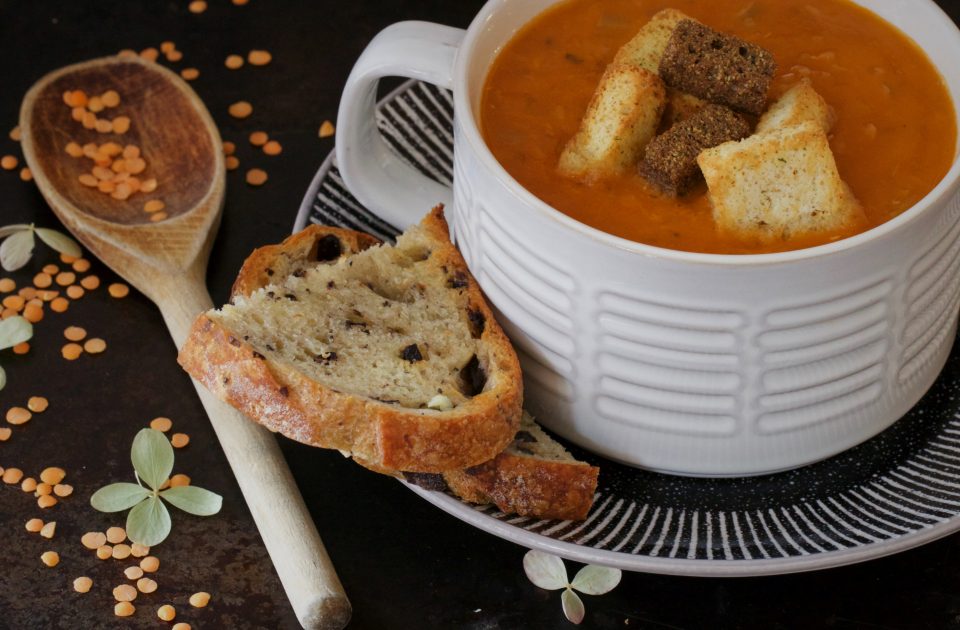
Soups, salads, and whole fruits are classic examples of high-volume, low-density foods. A large bowl of vegetable soup before a meal, for instance, has been shown in multiple feeding studies to reduce total calorie intake at that meal, simply because it occupies stomach volume before the entrée arrives.
- Start meals with a broth-based soup or a big salad to pre-load volume
- Choose whole fruit over fruit juice, which strips out fiber and concentrates sugar
- Swap refined grains for oats, barley, quinoa, or legumes when possible
Why Ultra-Processed, Energy-Dense Foods Backfire
Energy density, or calories per gram, is one of the clearest predictors of overeating. Foods like fries, pastries, and packaged snacks pack a huge number of calories into a small volume, so you can eat far past the point of caloric need before your stomach ever registers being full. Research consistently shows that diets higher in ultra-processed foods are associated with greater ad-libitum calorie intake compared with minimally processed diets matched for calories and macronutrients.
This is not about labeling any single food as forbidden. It is about recognizing that a handful of almonds and a handful of candy can look similar on a plate while delivering very different amounts of fullness per calorie, which matters enormously over the course of a week. Many low-satiety foods are also loaded with added sugar; the AHA advises capping added sugar at roughly 25 grams a day for women and 36 grams for men, a limit that is easy to blow past with a single pastry or sugary latte and hard to blow past with fruit, oats, or yogurt.
How to Apply This: Building a High-Satiety Plate
You do not need to overhaul your entire diet to benefit from this concept. A simple mental checklist at each meal can shift your default choices toward foods that keep you satisfied longer.
- Anchor the meal with a protein source about the size of your palm
- Add a fibrous vegetable or a source of legumes to increase volume
- Choose a minimally processed carbohydrate, like potatoes, oats, or rice, over refined or fried versions
- Include a small amount of healthy fat, such as olive oil, avocado, or nuts, for flavor and satisfaction
- Drink a glass of water before eating, especially if you tend to eat quickly
A sample high-satiety day might look like: eggs with vegetables and fruit at breakfast, a large salad with grilled chicken or beans at lunch, an apple with a handful of nuts as a snack, and a dinner built around fish or tofu, a fibrous vegetable, and a whole grain like quinoa or a baked potato.
Individual Variation Matters
Satiety is not identical for everyone. Genetics, gut hormone sensitivity, sleep quality, stress levels, and even how quickly you eat all influence how full a given meal makes you feel. Someone with poor sleep, for example, tends to experience higher levels of ghrelin and lower levels of the fullness hormone leptin the next day, which can override even a well-constructed high-satiety meal. If you have a medical condition affecting digestion, appetite, or blood sugar, it is worth discussing meal planning with a registered dietitian or healthcare provider rather than relying on general guidelines alone.
Is the satiety index the same as the glycemic index?
No. The glycemic index measures how quickly a food raises blood sugar, while the satiety index measures how full a food makes you feel per calorie. Some foods, like boiled potatoes, actually score high on both scales, but many others diverge significantly.
Can drinking water before meals really reduce how much I eat?
Some evidence suggests that drinking water before a meal modestly reduces intake in that sitting, likely through mild stomach distension, though the effect is smaller than eating high-volume foods and varies from person to person.
Do low-satiety foods need to be avoided completely?
No, and trying to eliminate them entirely often backfires. The goal is to make high-satiety foods the foundation of most meals so that lower-satiety treats fit in without derailing your overall intake.
How quickly can I expect to notice a difference?
Many people notice feeling fuller between meals within just a few days of prioritizing protein, fiber, and volume, though building lasting habits typically takes several weeks of consistent practice.
Related reading
Affiliate & medical disclosure: This review is independent and for information only, not medical advice. Some links may be affiliate links; we may earn a commission at no cost to you, which never affects our score. Consult a licensed provider before starting any product.