Do Blue-Light Glasses Work? What the Sleep Research Actually Says
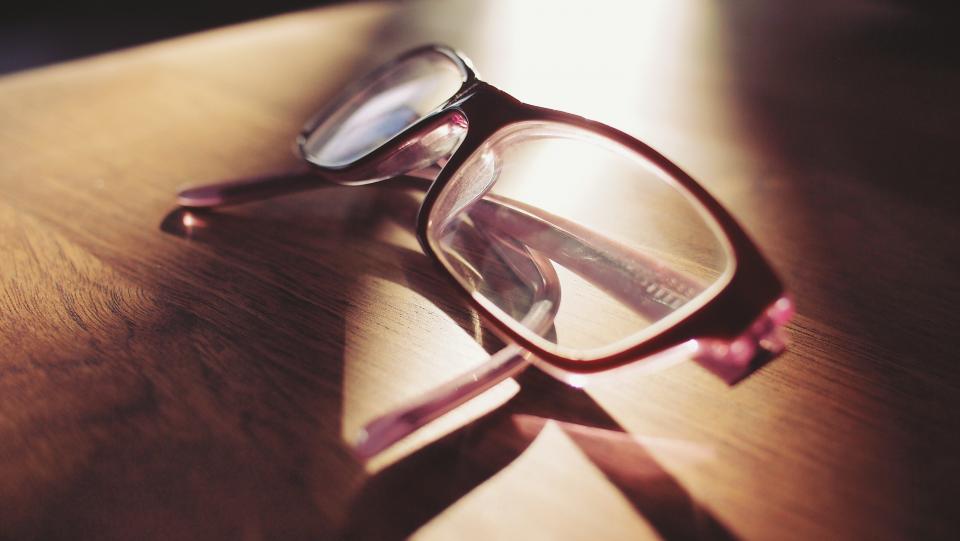
They’re on every drugstore rack and half the faces in your video calls: yellow-tinted glasses promising to protect your eyes and rescue your sleep from the scourge of blue light. A $20 fix for a modern poison. The pitch is clean, the science underneath it is anything but — and a string of rigorous reviews has been quietly deflating the category while sales keep climbing.
Worth sorting out, because the real story assigns the blame differently — and the actual fixes are mostly free.
Where the blue-light theory comes from
The kernel is solid physiology. Your circadian clock takes its cues from light hitting specialized receptors in the retina, and those receptors are most sensitive to short-wavelength — blue — light. Evening light exposure suppresses melatonin, the hormone that opens the door to sleep, and blue wavelengths do it most efficiently. In one well-known Harvard-affiliated experiment, blue light suppressed melatonin for about twice as long as green light of comparable brightness and shifted circadian timing by roughly twice as much.
Screens emit blue-heavy light. Therefore screens wreck sleep, therefore filter the blue, therefore buy the glasses. Each step sounds airtight. The chain breaks on a variable the marketing skips: dose.
The dose problem
The lab studies that produced dramatic melatonin suppression mostly used bright light — hundreds of lux, sometimes thousands. A phone at typical viewing distance delivers on the order of tens of lux; even a bright laptop is dim compared with the overhead lighting in your own kitchen. Careful measurement studies have found phone-screen melatonin suppression to be real but modest, and several trials found that an hour or two of evening tablet use delayed sleep onset by only minutes — not the catastrophe the headlines advertised.
Meanwhile the elephant: if evening blue light were the dominant driver, the brightly lit room you’re sitting in would matter more than the phone in your hand. It usually does. People wearing blue-blockers under blazing ceiling lights are filtering the teaspoon and ignoring the bucket.
What the reviews say about the glasses
A 2023 Cochrane review — the closest thing evidence-based medicine has to a final word — pooled 17 randomized trials of blue-light-filtering lenses and concluded they probably make little to no difference to eye strain from screens, found no reliable evidence for vision protection, and rated the sleep evidence as uncertain and inconsistent, based on small studies of variable quality. The American Academy of Ophthalmology goes further on the eye side: it does not recommend blue-blocking glasses at all, noting that digital eye strain comes from how we use screens — reduced blinking, poor distance, long unbroken sessions — not from blue wavelengths damaging anything.
The fair asterisk: a few small trials of strong amber lenses worn for the entire evening — not just during screen time — reported earlier melatonin rise and modest sleep improvements, particularly in people with insomnia or delayed sleep phase. Full-evening orange goggles are a different intervention from stylish clear-ish office lenses, and the distinction matters. The product most people buy has the least evidence behind it.
The part of screen use that actually hurts sleep
Research increasingly points at arousal, not wavelength, as the main villain. The group chat argument, the cliffhanger episode, the doomscroll, the one-more-round game — these keep your brain in an alert, dopamine-poked state that’s incompatible with drifting off, no matter what color the photons were. Studies comparing passive viewing against interactive use find the interactive kind delays sleep more. And the National Sleep Foundation’s guidance leans on this: it’s the stimulation plus the displaced sleep time — bedtime scrolling eats the sleep window directly — that does most of the damage.
Night-shift modes tell the same story. Trials of iPhone Night Shift found that warming the screen’s color did not meaningfully improve sleep compared with regular screen use; some found no difference between Night Shift and no screen restrictions at all. If shifting the wavelength fixed the problem, those studies should have been slam dunks. They weren’t.
What to do instead (mostly free)
- Dim the whole room after sunset, not just the screen. Lamps over ceiling lights, warm bulbs where you wind down. This moves more photons than any lens.
- Keep a screen curfew where it counts: the last 30–60 minutes. Not because of blue light — because of arousal and displaced sleep time. Boring content is a legitimate loophole; save the thriller for daylight.
- Get bright morning light. Circadian robustness is built in the morning; ten minutes outside anchors your clock better than an evening of filtering defends it.
- For eye comfort, use the 20-20-20 rule — every 20 minutes, look at something 20 feet away for 20 seconds — which is the AAO’s actual recommendation for screen strain.
- If you love your blue-blockers, keep them. They’re harmless, and if they function as a ritual that signals wind-down, rituals genuinely help sleep. Just know which mechanism you’re paying for.
Persistent insomnia deserves more than optics either way — cognitive behavioral therapy for insomnia is the first-line treatment with the strongest evidence, and a sleep-clinic conversation beats another accessory.
So blue light doesn’t matter at all?
It matters — timing and dose decide how much. Bright, blue-rich light late at night genuinely shifts your clock; that’s exactly why morning sunlight is so useful in the other direction. The claim that fails is the narrow one: that filtering blue from a dim screen meaningfully fixes sleep.
Are blue-light glasses bad for you?
No. Worst case, mild color distortion and a purchase you didn’t need. The real cost is misdirected attention — believing the glasses solved evening habits that remain unsolved.
What about kids and screens at night?
Children’s eyes transmit more light and their bedtimes are earlier, so evening screen effects are plausibly larger — and the arousal problem is, if anything, worse. The pediatric consensus lands on device-free bedrooms and consistent curfews rather than filtering accessories.
Does dark mode help sleep?
It reduces total light emitted, which can’t hurt, and it’s easier on the eyes in a dark room. As a sleep intervention it inherits the same verdict as Night Shift: pleasant, marginal, and no substitute for putting the phone down.
Related reading
Affiliate & medical disclosure: This review is independent and for information only, not medical advice. Some links may be affiliate links; we may earn a commission at no cost to you, which never affects our score. Consult a licensed provider before starting any product.