Everlywell Review: We Tested the At-Home Lab Kit Experience End to End
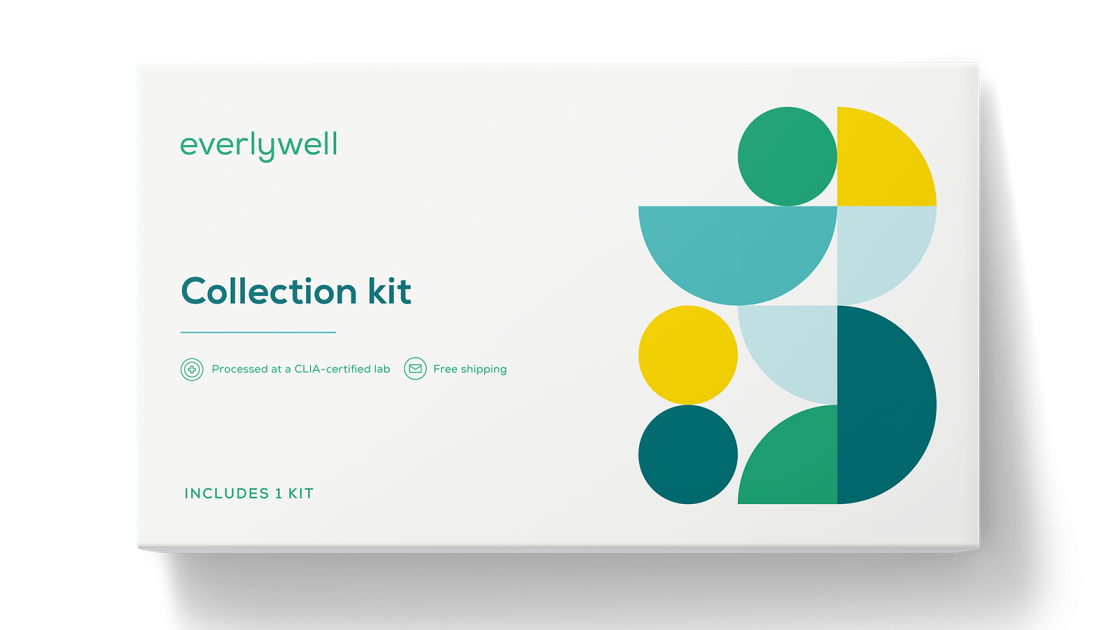
At-home lab testing sits in an odd space between healthcare and consumer product. The pitch is obvious — no waiting room, no referral, results on your phone — but the question underneath is whether a mail-in kit tells you anything genuinely useful. Everlywell is the most recognizable name in the category, so we worked through the catalog, the process and the pricing to find out where it earns its place.
What Everlywell offers
The catalog is broader than most people realize, spanning six main areas:
- Daily health — thyroid, cholesterol and inflammation markers
- Digestive health — food sensitivity panels covering 96 to 204 foods
- Sexual health — STI screening including chlamydia and gonorrhea
- Hormone health — women’s wellness panels
- Cancer screening — the Galleri multi-cancer detection test
- Gut microbiome — the Jona test with AI-generated recommendations
There is also an Everlywell 360 panel covering 83 biomarkers for people who want a broad baseline rather than a single answer.
How the process actually works
You order online, the kit arrives, you collect the sample at home — usually a finger-prick blood spot, saliva or urine depending on the test — and mail it back in the prepaid packaging. Results appear in an online portal, with optional virtual consultations available for interpretation.
The friction points are predictable and worth knowing: finger-prick collection takes practice, insufficient sample volume is the most common cause of a rejected kit, and timing matters for hormone tests in particular.
Pricing, plainly
Tests span roughly $49 for cholesterol to $949 for the Galleri cancer screening, with most falling between $149 and $299. That spread makes generalizations useless — a $49 cholesterol panel is an easy experiment, while a $949 screening test is a considered medical decision that deserves a conversation with your doctor first.
Where at-home testing genuinely helps — and where it doesn’t
The honest case for these kits is access and privacy. People who avoid clinics for reasons of time, cost, embarrassment or distance often do no testing at all, and something is better than nothing. Sexual-health screening is the clearest example: the CDC has repeatedly emphasized that many STIs are asymptomatic, and regular screening is the only reliable way to catch them.
The limitations deserve equal weight. A result without clinical context can mislead — a single out-of-range value often means very little, food-sensitivity panels in particular are viewed sceptically by many allergy specialists, and no mail-in kit replaces a physician who knows your history. Everlywell’s optional consultations help, but they are not the same as ongoing care.
Getting real value from a kit
- Decide what you would actually do differently with each possible result. If the answer is nothing, skip the test.
- Follow the collection instructions exactly — fasting windows and time-of-day rules exist because they change the numbers.
- Take results to your own doctor rather than self-diagnosing, especially anything abnormal.
- Retest before acting on a surprising single result; lab variation is real.
- Treat broad panels as a baseline to track over time, not as a verdict.
Who it suits
- Good fit: people who want privacy or convenience for routine screening, those tracking a known marker over time, and anyone who would otherwise skip testing entirely.
- Poor fit: people with active symptoms needing diagnosis, anyone expecting a kit to replace a doctor, and buyers likely to be alarmed rather than informed by an isolated number.
Pros and cons
What we liked
- Genuinely broad catalog across six health areas
- Simple ordering, collection and portal results
- Optional virtual consultations for interpretation
- Entry-level tests are affordable enough to be low-risk
- Privacy for topics people avoid discussing in person
What to weigh
- Premium tests reach $949 — a real medical decision, not a purchase
- Food-sensitivity testing remains scientifically contested
- Results lack the clinical context a physician provides
- Home collection errors can force a retest
Our verdict
Everlywell does the hard operational part well: ordering is simple, collection is manageable, and results arrive clearly presented. Used as a convenient front door to testing you would otherwise postpone — and interpreted with a clinician rather than alone — it is a genuinely useful service. Used as a substitute for medical care, or as an excuse to self-diagnose from a single number, it is the wrong tool.
Privacy, limitations and medical context
At-home tests are diagnostic tools with real limitations, and treating them as a substitute for medical care is the mistake most likely to cause harm. Results should be interpreted alongside your symptoms, history and medication list — context a portal cannot supply. If a result is abnormal, or if you have symptoms that prompted the test in the first place, take the report to a clinician rather than searching for explanations online.
It is also worth understanding what a single measurement can and cannot tell you. Many biomarkers fluctuate with time of day, recent meals, illness, exercise and stress; a single out-of-range value frequently normalizes on retest. That is why tracking a marker over time is usually more informative than one snapshot, and why acting decisively on one surprising number is rarely wise. Used as a convenient way to start a conversation with your doctor, at-home testing earns its place. Used as a self-contained diagnosis, it does not. This review is information, not medical advice.
Frequently asked questions
How much do Everlywell tests cost?
From about $49 for cholesterol to $949 for Galleri cancer screening, with most tests between $149 and $299.
How does the process work?
Order online, collect your sample at home, mail it back in prepaid packaging, and view results in a secure portal — with optional virtual consultations available.
Are food sensitivity tests reliable?
They remain scientifically contested; many allergy specialists caution against using them to drive elimination diets. Discuss results with a clinician before removing foods.
Can Everlywell replace my doctor?
No. It provides data; interpretation, diagnosis and treatment need a clinician who knows your history.
What is the Everlywell 360?
A broad panel covering 83 biomarkers, aimed at people wanting a general baseline rather than one specific answer.
Related reading
Affiliate & medical disclosure: This review is independent and for information only, not medical advice. Some links may be affiliate links; we may earn a commission at no cost to you, which never affects our score. Consult a licensed provider before starting any product.