Sandbag Training: An Unstable-Load Workout for Real-World Strength
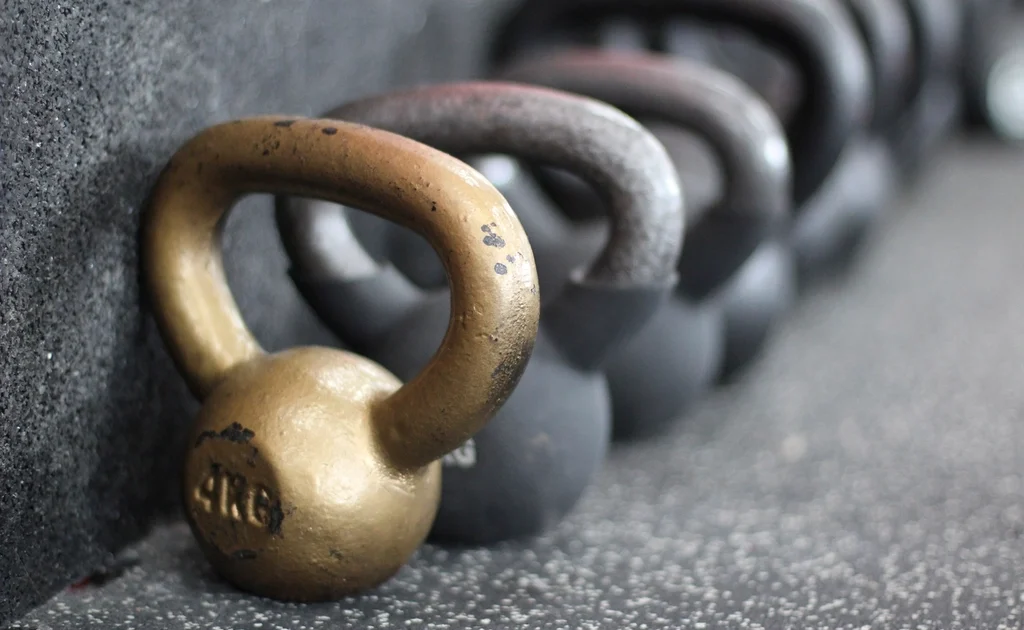
Walk into most commercial gyms and you’ll see rows of dumbbells, barbells, and machines — but rarely a sandbag. That’s a missed opportunity, because sandbag training is one of the few tools that forces your body to work the way it does in real life: against an unstable, shifting load rather than a perfectly balanced weight.
Strongman athletes, military and tactical fitness programs, and functional-training coaches have used sandbags for decades, and the format has recently gained traction with everyday lifters looking for a joint-friendly, low-cost way to build full-body strength. Here’s what sandbag training actually does for your body and how to start safely.
What Makes Sandbag Training Different
Unlike a barbell or dumbbell, the sand inside a training bag shifts every time you move. Your muscles — especially the smaller stabilizer muscles around your spine, hips, and shoulders — have to constantly adjust to keep the load under control. This is sometimes called “unstable load training,” and it’s a fundamentally different stimulus than lifting a fixed, evenly distributed weight.
Because the resistance is unpredictable, sandbag work tends to recruit more muscle groups simultaneously than an equivalent barbell lift, and it closely mimics real-world tasks like carrying a heavy bag of mulch, lifting a child, or moving furniture — activities where load never stays perfectly still.
The Evidence-Based Benefits
Research consistently shows that training with unstable or shifting loads increases core and stabilizer muscle activation compared to training with fixed, symmetrical implements. This carries over to functional strength — the kind used in daily movement — more directly than many machine-based exercises.
Sandbags are also lower-impact on joints than many alternatives. Because bags are typically gripped with a bear hug, on the shoulder, or held close to the body, the load path tends to be more forgiving on the wrists and lower back than an equivalent barbell exercise, which is one reason physical therapists and tactical fitness coaches often use them in return-to-activity programs.
- Builds grip, core, and stabilizer strength simultaneously
- Improves the ability to control awkward, real-world loads
- Inexpensive compared to a full set of dumbbells or a barbell and plates
- Scalable — you control the exact weight by adding or removing filler
Getting Started: Equipment and Loading
A dedicated sandbag training bag (rather than a plain contractor bag) has internal filler bags and reinforced handles, which matters for safety and durability. Beginners generally do well starting with 30-50% of what they might deadlift with a barbell, since the instability makes even a “light” load feel considerably harder.
The Academy of Nutrition and Dietetics and general strength-training guidance both emphasize that any new resistance-training modality should be introduced gradually, and sandbag work is no exception — expect your first few sessions to challenge your grip and core more than your prime movers.
Core Sandbag Movements to Learn First
You don’t need a long exercise list to get a full-body sandbag workout. A handful of movements cover most of what you need:
- Bear-hug squat: Hold the bag against your chest and squat, keeping your torso upright. Builds legs and core bracing.
- Shouldering: Lift the bag from the ground to one shoulder in a single fluid motion, alternating sides. Builds total-body power and grip.
- Sandbag carry: Walk for distance or time with the bag held at your chest or on one shoulder. Builds core stability and conditioning.
- Sandbag deadlift: Similar to a barbell deadlift, but the shifting load demands slower, more controlled movement.
- Overhead press: Press the bag from shoulder height to overhead, which trains shoulder stability far more than a fixed dumbbell.
A Simple Sample Routine
For a beginner-friendly, full-body sandbag session two to three times per week:
- Bear-hug squats: 3 sets of 10-12
- Alternating shouldering: 3 sets of 6 per side
- Sandbag carry: 3 rounds of 30-40 meters
- Sandbag deadlift: 3 sets of 8-10
- Overhead press: 2-3 sets of 8-10
Rest 60-90 seconds between sets. As with any new training style, the World Health Organization’s general guidance of at least 150 minutes of moderate weekly activity, including muscle-strengthening work on two or more days per week, is a reasonable baseline to build this kind of training into a broader fitness routine.
Safety Considerations
Because sandbags demand more core bracing and stabilization than fixed-weight tools, form breakdown happens faster when you fatigue. Stop a set if you notice your lower back rounding excessively or your grip failing to the point that control is lost. As with any new resistance-training program, people with existing back, shoulder, or joint issues should check with a healthcare provider or physical therapist before starting, and everyone benefits from learning basic hinge and squat mechanics before adding an unstable load on top.
How heavy should my first sandbag be?
Most beginners do well starting in the 20-40 pound range for full-body movements like carries and squats, and lighter still for overhead work. You can always add sand or filler bags as you progress.
Can sandbag training replace barbell training entirely?
It can serve as a complete strength stimulus, especially for general fitness, but if maximal strength or precise load progression is a priority, sandbags work best as a complement to barbell training rather than a full replacement.
Is sandbag training good for beginners?
Yes, with appropriate loading. The movements are intuitive and low-impact, though the instability means beginners should start lighter than they might expect and prioritize control over speed.
How do I clean a sandbag or replace the filler?
Most training sandbags have a durable outer shell and separate inner filler bags, so you can wipe down the exterior and swap or refill the inner bags as needed without exposing sand directly to your gym floor.
Who benefits most from sandbag training?
It suits people who want a single tool that trains strength, conditioning, and core stability at once — including athletes preparing for sports with unpredictable loads, people rehabbing from injury under professional guidance, and anyone who wants an effective home-gym option without buying a full rack of dumbbells. People training purely for maximal one-rep strength on the big barbell lifts may find sandbags more useful as an accessory tool than a primary one.
Related reading
Affiliate & medical disclosure: This review is independent and for information only, not medical advice. Some links may be affiliate links; we may earn a commission at no cost to you, which never affects our score. Consult a licensed provider before starting any product.